Industrial Sensor Standards: IEC, ISO, IP, EMC & Safety
Industrial sensor standards are selected by the property that must be demonstrated: sensor type, measurement performance, ingress protection, EMC, environmental robustness, hazardous-area protection, communication, calibration or functional safety. Key references include IEC 60947-5-2 for proximity switches, the IEC 62828 series for process measurement transmitters, IEC 60529 for IP codes and IEC 61326-1 for EMC.
A datasheet can legitimately cite several standards because each addresses a different part of the product or measurement chain. The useful question is not “is this sensor IEC compliant?” but “which standard, which edition, which test or class, and what evidence supports the exact claim?”
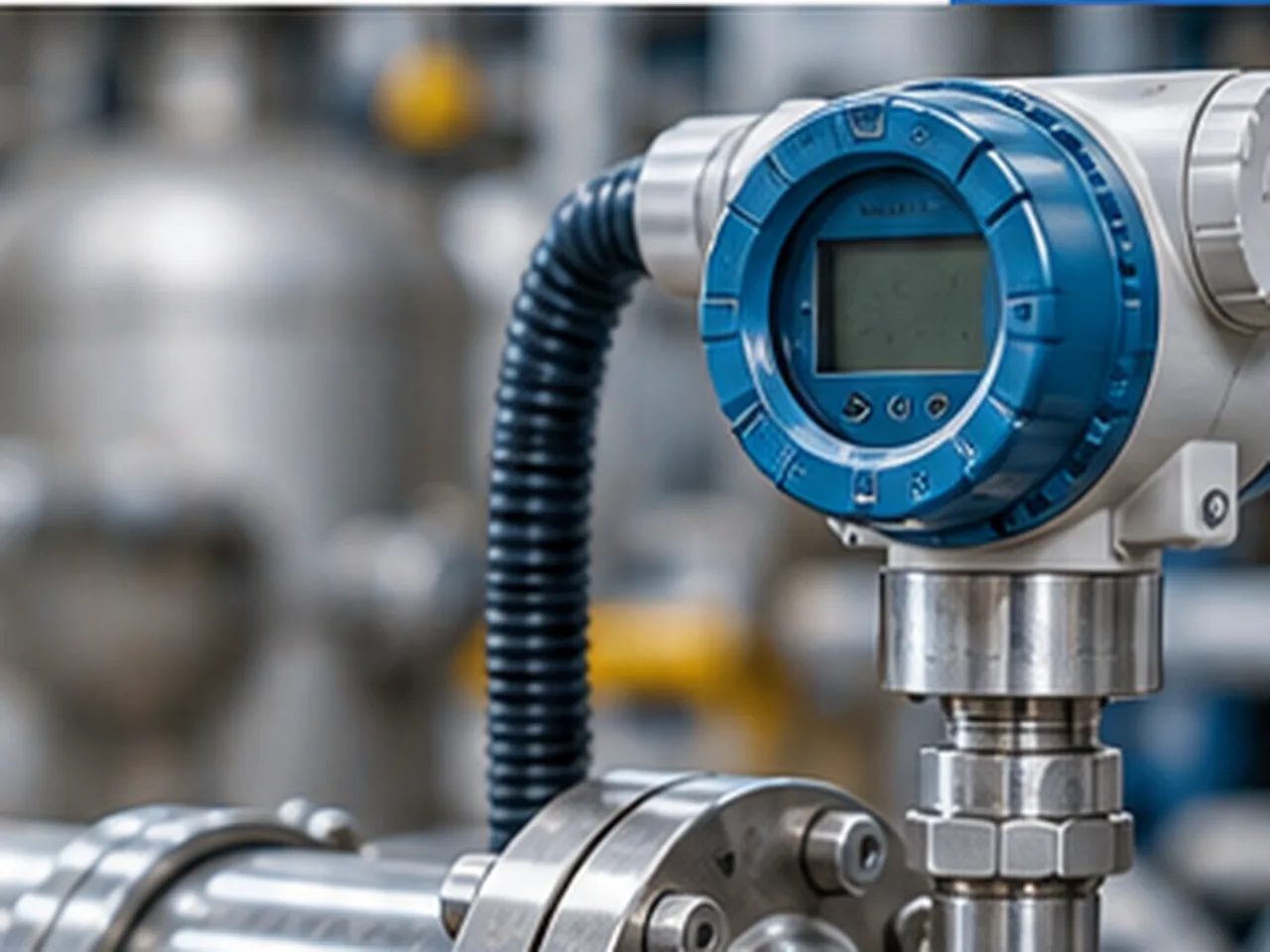
Do not treat a standard number as a universal approval mark. Confirm the device is within scope, check the current or contractually required edition, and record the relevant test severity, performance criterion, protection class or safety data.
Industrial sensor standards are organised by the requirement being verified
No single IEC or ISO document covers every industrial sensor. Product standards define requirements for specific device families, horizontal standards cover properties such as enclosure protection or electrical safety, and system standards address functional safety or control integration. Specifications should separate these layers rather than use “IEC compliant” as a single requirement.
| Requirement | Typical reference | What it addresses | What it does not establish by itself |
|---|---|---|---|
| Proximity switching | IEC 60947-5-2 | Defined proximity-switch technologies, construction, characteristics and tests. | Accuracy of a process transmitter, hazardous-area approval or a complete safety function. |
| Process transmitter performance | IEC 62828 series | Reference conditions and procedures for testing industrial and process measurement transmitters. | IP rating, EMC compliance or system-level functional safety. |
| Enclosure protection | IEC 60529 | IP classification for protection provided by enclosures. | Chemical compatibility, corrosion life, vibration endurance or hygienic washdown suitability. |
| EMC | IEC 61326-1 | Immunity and emissions for measurement, control and laboratory equipment within scope. | Noise-free operation in every installed wiring arrangement. |
| Hazardous areas | IEC 60079 series | Construction, testing and types of protection for equipment used in explosive atmospheres. | Market certification, installation suitability or the complete hazardous-area loop. |
| Laboratory competence | ISO/IEC 17025 | Competence, impartiality and consistent operation of testing and calibration laboratories. | Product conformity with a sensor, EMC or safety standard. |
Which standards apply to proximity, temperature, pressure, level and flow sensors?
The applicable standard follows the device function, not the marketing name. A Pt100 sensing element, a head-mounted temperature transmitter and a temperature switch can require different standards even though all three are sold as temperature sensors. The table below maps common industrial sensor families to the standards most often used as technical starting points.
| Sensor / device | Key reference | Main scope |
|---|---|---|
| Proximity switches | IEC 60947-5-2:2019 | Inductive, capacitive, ultrasonic, photoelectric and non-mechanical magnetic proximity switches within the defined scope. |
| Industrial Pt100 / Pt1000 RTDs | IEC 60751:2022 | Industrial platinum resistance thermometers and platinum temperature sensors, including resistance-temperature characteristics and requirements. |
| Thermocouples | IEC 60584-1:2013 | Reference functions and tolerances for letter-designated thermocouple types. |
| Pressure transmitters | IEC 62828-2:2026 | Specific procedures for testing pressure process measurement transmitters, used with IEC 62828-1. |
| Temperature transmitters | IEC 62828-3:2018 | Specific transmitter test procedures; treatment of the sensing element depends on whether it is separate or integrated. |
| Level transmitters | IEC 62828-4:2020 | Specific procedures for industrial level transmitters across measurement principles. |
| Flow transmitters | IEC 62828-5:2020 | Specific procedures for industrial flow transmitters for liquids, gases and steam. |
| Fibre-optic sensors | IEC 61757:2026 | Generic specification and framework for characterising and specifying fibre-optic sensors. |
IEC 60947-5-2 is a product standard for defined proximity-switch technologies
IEC 60947-5-2:2019 applies to inductive and capacitive proximity switches, ultrasonic proximity switches, photoelectric proximity switches and non-mechanical magnetic proximity switches within its stated scope. It is part of the low-voltage switchgear and controlgear series, so it addresses switching devices and their specified characteristics rather than every sensor that measures position or distance.
Presence detection based on electromagnetic or capacitive effects. Rated operating conditions, switching characteristics and construction requirements belong to the product-standard context.
Presence detection using sound-reflecting targets. A proximity switch is not the same product as a continuous ultrasonic distance transmitter.
Optical presence detection. Safety-related optical protective devices and continuous optical displacement sensors can fall under other standards.
Non-mechanical magnetic proximity switches are included; other magnetic measurement devices may require different references.
Do not extend the scope by analogy. A laser displacement sensor, LVDT, encoder or pressure transmitter is not automatically covered simply because it is called a “sensor”. For IO-Link versions, the switching-device standard and the communication interface are separate layers.
IEC 62828 is the current core test framework for process measurement transmitters
IEC 62828-1:2026 establishes the general framework for reference conditions and procedures used to assess measurement performance of industrial and process measurement transmitters. It is the common reference for the specific pressure, temperature, level and flow parts of the series, and it explicitly excludes sensing devices covered by the IEC 60947 series.
| Reference | Area | Engineering use |
|---|---|---|
| IEC 62828-1:2026 | General procedures | Common reference conditions and procedures for evaluating measurement performance of industrial and process measurement transmitters. |
| IEC 62828-2:2026 | Pressure | Specific test procedures for pressure process measurement transmitters, including devices with remote seals within scope. |
| IEC 62828-3:2018 | Temperature | Specific procedures for temperature transmitters; the standard distinguishes separate sensing elements from fully integrated devices. |
| IEC 62828-4:2020 | Level | Specific procedures for level transmitters across measurement principles. |
| IEC 62828-5:2020 | Flow | Specific procedures for flow transmitters used with liquids, gases and steam. |
2026 change: IEC 61298-1:2026 and IEC 61298-2:2026 now exclude process measurement transmitters because PMTs are standardised by IEC 62828. Older specifications can still cite IEC 60770 or earlier IEC 61298 editions; when reviewing them, distinguish a legacy contractual reference from the current IEC framework.
IP ratings, EMC and environmental tests verify different forms of robustness
IEC 60529 classifies enclosure protection against access to hazardous parts, solid foreign objects and water. The current consolidated IEC publication incorporates Amendment 1:1999 and Amendment 2:2013. An IP code is useful, but it does not describe chemical compatibility, corrosion resistance, vibration life, thermal cycling or the behaviour of seals during repeated washdown.
IEC 60529 — IP Code
- Use the complete IP designation rather than an informal word such as “waterproof”.
- Connectors, cable glands, covers and installation orientation can affect the final enclosure performance.
- Do not infer steam, oil, solvent or cleaning-agent resistance from an IP code alone.
IEC 60068 environmental tests
- IEC 60068-2-6:2007 — sinusoidal vibration.
- IEC 60068-2-27:2008 — shock.
- IEC 60068-2-64:2008+A1:2019 — broadband random vibration.
- Test severity, mounting and operating state must match the qualification requirement.
IEC 61326-1:2020 provides general EMC requirements for electrical equipment used for measurement, control and laboratory purposes within its scope. Passing a laboratory EMC test does not remove the need for correct field installation: shield termination, cable routing, grounding, supply quality and proximity to variable-speed drives or switching devices can change the installed result.
Hazardous-area protection and sensor communication add separate standards layers
For sensors used in explosive atmospheres, the IEC 60079 series becomes central. IEC 60079-0:2026 specifies general requirements for construction, testing and marking of Ex Equipment and Ex Components. IEC 60079-11:2023 covers equipment protection by intrinsic safety “i”; the published copy includes later corrigenda and interpretation sheets. The exact type of protection and certification required depends on the hazardous-area classification and installation.
| Reference / scheme | Applies to | Key distinction |
|---|---|---|
| IEC 60079-0:2026 | General Ex equipment requirements | A base equipment standard; additional parts define particular types of protection. |
| IEC 60079-11:2023 | Intrinsic safety “i” | Assesses intrinsically safe apparatus and associated apparatus/circuits within scope. |
| IEC 61131-9:2022 | IO-Link / SDCI | Defines the point-to-point digital communication interface for small sensors and actuators; it does not replace the sensor's product standard. |
| IEC 61131-2:2017 | PLC / PAC equipment and I/O context | Relevant to industrial control equipment and interfaces, not a universal sensor product standard. |
| NAMUR NE 43 | 4–20 mA transmitter fault signalling | An industry recommendation for analogue transmitter signal/fault behaviour, not an IEC International Standard. |
Market-access schemes and technical standards also need to be separated. CE marking, UKCA, UL Listing and IECEx certification are not interchangeable with a bare IEC standard number. The product, destination market and installation determine which conformity route and supporting documentation are required.
Calibration competence and functional safety are separate from normal sensor performance
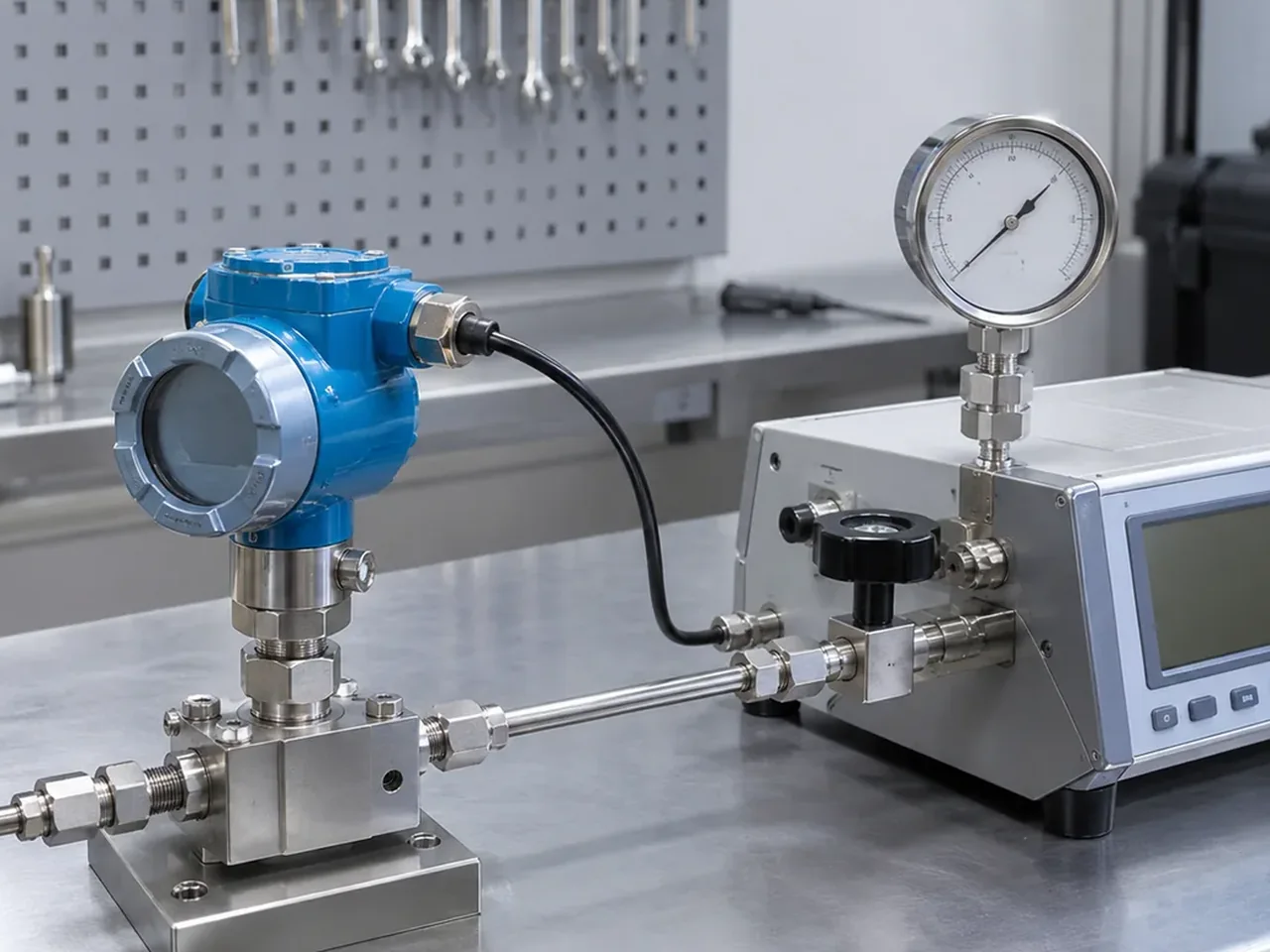
ISO/IEC 17025:2017 specifies requirements for competence, impartiality and consistent operation of testing and calibration laboratories; ISO confirmed the edition in 2023. Accreditation can strengthen confidence in a calibration or test result, but it does not convert that result into product approval for every EMC, safety or environmental requirement.
IEC 61508
Generic framework for functional safety of electrical, electronic and programmable electronic safety-related systems. A normal sensor accuracy or IP claim is not a SIL claim.
ISO 13849-1:2023 / IEC 61511
ISO 13849-1 addresses safety-related parts of machinery control systems. IEC 61511 applies the functional-safety lifecycle to safety instrumented systems in the process industry. The required evidence depends on the complete safety function.
Each sensor requirement should be linked to supporting evidence
Select standards by the property that must be demonstrated, then state the edition, class or test severity where relevant. Ask for evidence that identifies the exact model and configuration tested. A standard number without scope, edition or acceptance criteria is weaker than a short requirement that states exactly what must be proved.
- Identify the device type. Separate sensing elements, proximity switches, continuous sensors, process transmitters, safety sensors and control equipment.
- Define the property. Accuracy, repeatability, EMC, ingress protection, vibration, Ex protection, interface compatibility and functional safety are different requirements.
- Check the scope. Confirm the device and claimed property are actually covered by the cited document.
- Check the edition. Record the current or contractually required edition; do not silently mix legacy and current test frameworks.
- State severity or class. IP code, EMC environment, vibration profile, safety data and performance class need the parameters that make the result meaningful.
- Request model-specific evidence. Test reports, certificates, declarations and calibration records should identify the exact product or defined product family.
- Check the test configuration. Cable length, connector, mounting, supply, operating state and environmental conditions can materially affect the result.
- Separate product and system claims. Product qualification does not replace machine risk assessment, SIS validation or installation verification.
Common mistakes when specifying industrial sensor standards
| Mistake | Why it is weak | Better requirement |
|---|---|---|
| “Sensor must be IEC compliant” | IEC publishes many standards with different scopes and no single universal sensor approval. | Name the applicable standard, edition and property or class that must be demonstrated. |
| Using IEC 60947-5-2 for every proximity or distance device | The standard covers defined proximity-switch technologies, not every continuous distance or position sensor. | Check product scope first; specify the appropriate distance, transmitter or interface standard separately. |
| Treating IP67/IP68 as chemical or washdown proof | IEC 60529 addresses defined enclosure ingress tests, not every material or cleaning exposure. | Specify ingress protection plus chemical compatibility, cleaning method and connector/seal requirements separately. |
| Using ISO/IEC 17025 as product certification | ISO/IEC 17025 concerns laboratory competence. | Separate calibration/test-lab competence from product conformity evidence. |
| Assuming EMC compliance guarantees a stable installed signal | Cable routing, grounding, shielding, supply quality and field electromagnetic conditions still affect the measurement. | Use device EMC evidence plus defined installation practices and commissioning checks. |
| Assuming an IO-Link logo replaces the sensor product standard | IEC 61131-9 covers the communication interface, not every sensing or safety characteristic. | Specify the sensor product requirements and IO-Link/SDCI interface requirements as separate layers. |
| Assuming a normal sensor is suitable for a safety function | Functional safety depends on the safety function, architecture, diagnostics and validated safety data. | Use the applicable functional-safety framework and validate the complete safety function. |